
When my lower back started complaining during morning sits last winter, I did what I usually do: I tried to make my old cushion work. For a few weeks I stacked blankets, shifted my hips, and told myself the discomfort was part of the practice. It was not. It was my body telling me that a zafu alone was no longer enough. That is when I ordered the Waterglider Meditation Bench.
I want to be clear about what this review is and is not. I am not here to promise that a wooden bench will deepen your meditation or heal your back. I am here to tell you what months of using this bench have actually been like, including the parts that took me a while to get used to.
The Quick Verdict
A firm, stable kneeling bench that solved my stiff-morning sits without asking me to become more flexible.
Amazon Check Today's Price →Sit without the fidgeting
The Waterglider bench gives your hips a stable place to rest and your spine a natural stack. See today's price on Amazon and read what other sitters have to say.
Amazon Check Today's Price on Amazon →How I've Used It
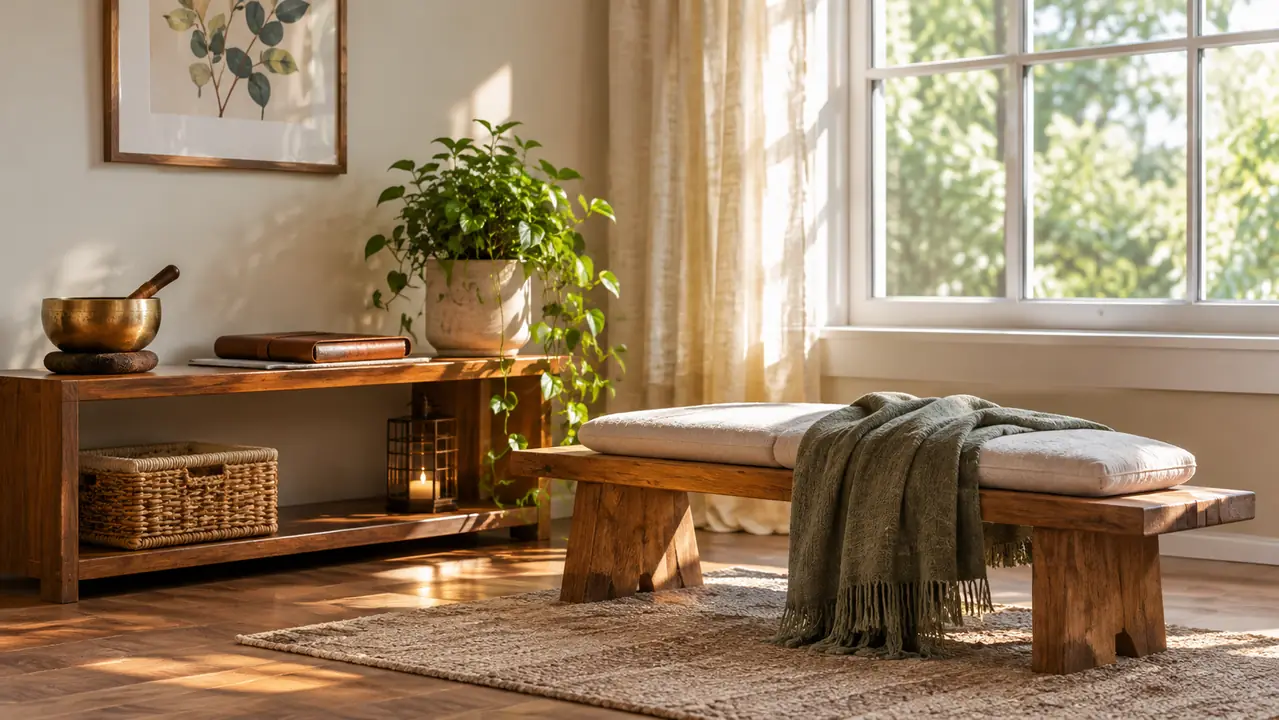
For the past year, the Waterglider bench has lived in the corner of my spare bedroom by the east-facing window. It sits next to the low wooden shelf where I keep my singing bowl, my journal, and the diffuser I run during my sit. On stiff mornings I sit on the bench. On other days I sit on my Retrospec Sedona zafu, which has been with me for about four years. They share the same corner, and I reach for whichever one my body asks for.
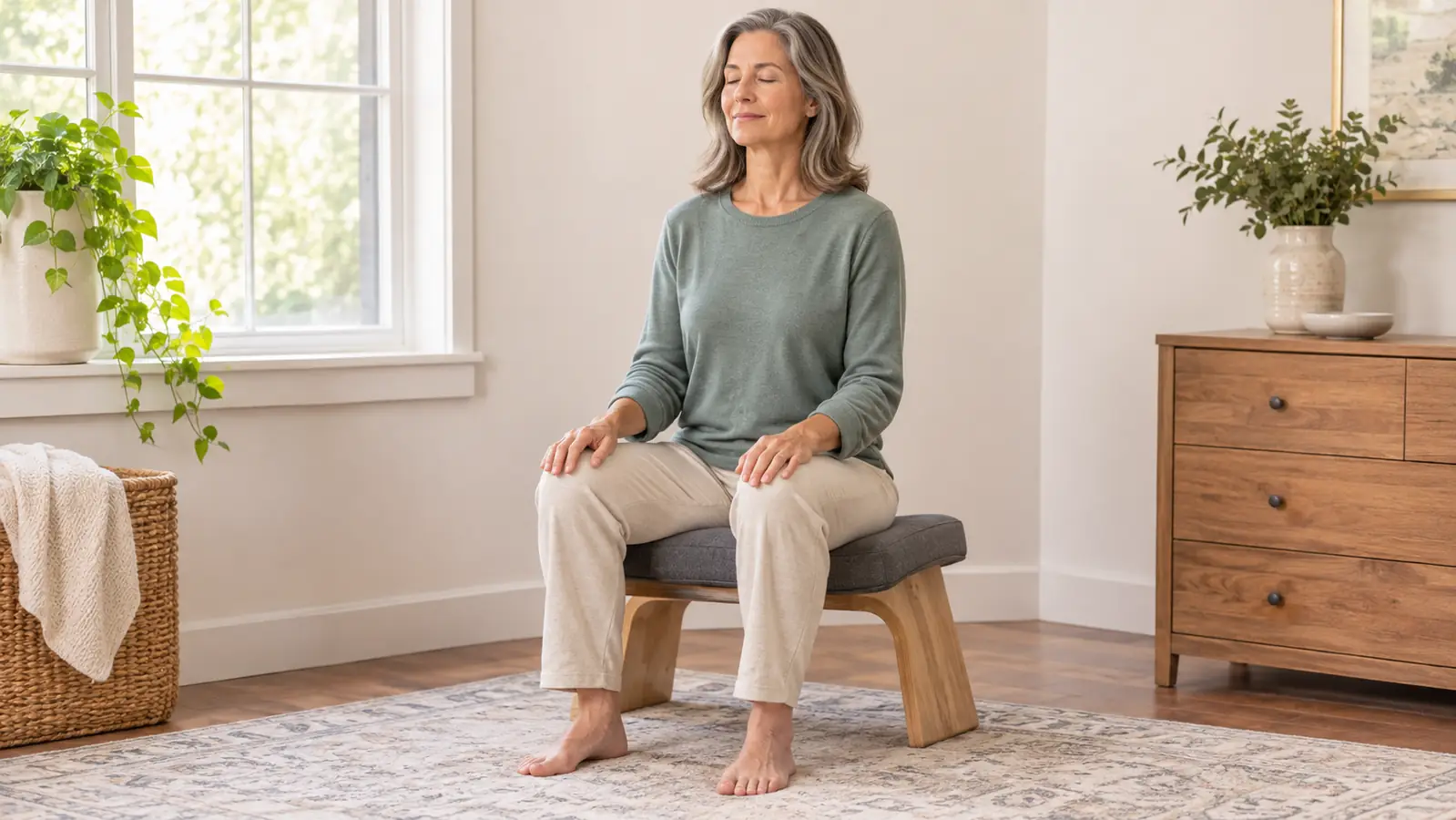
I usually sit for about twenty minutes before breakfast. I strike the singing bowl once to open the sit, settle onto whichever seat I have chosen, and let my hands rest on my knees. The bench is low enough that my feet stay flat on the floor, which is the detail that surprised me most. I had assumed a bench would feel like perching. Instead it feels like sitting in a small wooden chair that is doing exactly what I need it to do. One cold morning in February, when the house was still dark and the heat had not come on yet, I sat the full twenty minutes without shifting my weight once. That had not happened on the zafu in months. It was not a dramatic breakthrough. It was simply a sit where my body stopped asking for attention, which is the whole point of a seat.
I also use the bench on Tuesday evenings, when I lead the meditation circle at the library. It is easy to carry, so I bring it in a cloth bag and set it up in the meeting room. Several people in the group have asked about it, and one woman in my circle told me she had been avoiding benches because she thought they were only for very flexible people. Watching her try it for the first time reminded me how much of what we assume about sitting tools is simply habit.
Why I Needed More Than a Cushion
I have sat on a folded blanket for years, then on a zafu for about four years. Both were fine until my lower back got worse last winter. The trouble was not the cushion itself. It was the angle. On a cushion my hips were higher than my knees, which is usually good, but the round shape gave my pelvis nowhere to rest with much support. After twenty minutes I would start to shift, and by the end of the sit I was thinking about my back instead of my breath.
A meditation bench changes that angle. Because the seat is lower and your knees drop toward the floor, your hips and spine settle into a position that feels more supported. The Waterglider bench is 8.5 inches high, with a seat about 18 inches wide and 8 inches deep. Those numbers matter more than I expected. The height lets my feet rest flat, and the width gives my hips room without spreading too far.
The Bench in Practice
The first thing I noticed was the rounded legs. They are angled like the runners on a rocking chair, which sounds like a small detail and turns out to be the whole point. Because the bench can tilt slightly, I can find the spot where my hips feel most level without having to adjust a cushion or fold a blanket. I rock forward a little, settle, and my body stops hunting for a better position.
The bench is made of acacia wood and weighs about 3 pounds, so it is light enough to move around the house without thinking about it. It needed no assembly. I took it out of the box, wiped it with a dry cloth, and put it in the corner. The care instructions are simple: wipe with a dry cloth. That is the whole maintenance routine, and after a year of regular use on my stiff mornings mine still looks the same as the day it arrived.
One thing I want to be honest about: the bench took about a week to feel natural. The first few sits, I was aware of the seat edge under my thighs, and I kept second-guessing my position. I almost reached for my zafu out of habit. But by the second week, the bench stopped being something I thought about and became just where I sat. That is the test I use for any meditation tool. Does it disappear once you are sitting? The dimensions are 18 inches wide, 8 inches deep, and 8.5 inches high, and the compact footprint means it tucks into a corner without taking over the room. In my small house, that matters.
Before I ordered it, I tried to fix the problem with what I already owned. I stacked folded towels under my hips, rolled a blanket into a wedge, even borrowed a small footstool from the kitchen. The towels slid by the ten minute mark, the blanket collapsed, and the footstool was too high to be useful. I stopped improvising after that. The bench solved in one try what none of those experiments could.
What It Does for My Body
I have a stiff lower back and tight hips, and I am not flexible in the way meditation photos often suggest. What I have learned is that the bench does not ask me to be flexible. It changes the job my hips have to do. With my knees lower than my hips and my feet flat, my spine stacks more naturally, and my lower back does not have to work as hard to hold me upright.
I do not want to overstate this. The bench has not made my back pain disappear, and I would not expect any piece of furniture to do that. What it has done is remove one source of fidgeting from my sit. I sit longer without shifting, and I spend less of the sit thinking about my body. For someone who started meditating to find calm, that is a real and measurable shift.
One Tuesday evening at the library, I sat on the bench for the full circle, about forty minutes, and only noticed at the end that my feet had not moved once. I cannot say that about most chairs in my house. The difference is not dramatic. It is the quiet difference between a sit spent settling and a sit spent actually sitting. That evening I drove home and wrote in my journal that the bench had earned its corner.
The weight limit is listed at 250 pounds, and the bench is designed for practitioners up to 6 feet tall. I am not near either limit, so I cannot speak to how it feels at the edge of its range. What I can say is that it has held up well for me, and the rounded legs have not lost their gentle rock after a year of use.
The Honest Tradeoffs
The biggest tradeoff is that a bench is not a cushion. If I want to sit cross-legged with my knees supported, the zafu is the better choice. The bench asks your legs to fold under you in a kneeling position, and if your knees object to that, you will feel it. I have a friend who tried my bench once and found the pressure on her knees uncomfortable. She is shorter than I am, and the bench simply did not fit her the way it fits me. Her knees carried more of her weight, and she had to shift every few minutes to find relief. We moved on to another topic, but I noticed she went back to her own cushion the following week without saying much about it.
The seat is also firm. There is no padding, which is exactly what I want for sitting, but it takes a few sits to adjust if you are used to a soft cushion. The bench is 8.5 inches high, and that height is not adjustable. If you are very tall or very short, or if your knees are sensitive, you may need to try one before you commit.
I also want to be honest about the finish. It is smooth, easy to wipe clean, and has not chipped or scratched in the year I have owned it. I keep a dry cloth nearby and give it a quick wipe when I dust the shelf. The care instructions say to wipe with a dry cloth, and that has been enough.
How It Compares to My Zafu
I get asked a lot whether the bench has replaced my zafu. The honest answer is no. They do different jobs, and I use both most weeks. My Retrospec Sedona zafu is still the seat I reach for when I want to sit cross-legged with my knees supported. The Waterglider bench is what I choose on stiff mornings, when my lower back wants a firmer angle and my hips need to drop a little lower.
The way I think about it is simple. The zafu is for the days when I want to fold my legs and feel held. The bench is for the days when I want to sit with my feet on the floor and let my spine do the work. Having both in the same corner means I never have to force a sit. I just choose the tool that matches the body I woke up with.
If you are trying to decide between a bench and a cushion, I would not frame it as a contest. I would ask what your body needs on its hardest mornings. If the answer is more support and a lower hip angle, a bench is worth trying. If the answer is a soft place to fold your legs, a cushion may be enough. For me, the answer has been both.
I have also noticed that the bench invites a slightly different quality of attention. Because my body is more upright, my mind feels more alert. It is not a dramatic difference, but on days when I am sleepy, the bench helps me stay present in a way the zafu does not.
What I Liked
- Rounded and angled legs let you find a comfortable sitting angle
- Lightweight acacia wood bench, about 3 pounds, easy to move
- No assembly required and simple to care for
- Firm, supportive seat that encourages a natural spine position
- Designed for practitioners up to 6 feet tall and 250 pounds
Where It Falls Short
- Firm seat with no padding takes a few sits to get used to
- Fixed 8.5 inch height is not adjustable
- Kneeling position may not suit people with sensitive knees
- Not ideal for cross-legged sitting, which is where a zafu shines
After a year of regular use on my stiff mornings, the rounded legs have not lost their gentle rock, and the bench still looks the same as the day it arrived.
Who This Is For
The Waterglider bench is for people who want to sit on the floor but find a cushion uncomfortable. If your lower back complains during longer sits, if you have tight hips, or if you simply want a firm, stable seat that supports a kneeling position, this bench is worth considering. It is also a good choice if you are tall. The bench is designed for practitioners up to 6 feet tall, which is a detail many cushions cannot offer.
I think of it as a tool for people who have stopped trying to force their body into a shape it does not want to be in. You do not need to be flexible. You do not need to sit cross-legged. You just need a seat that lets your spine stack and your mind settle. For me, that is exactly what this bench does.
Who Should Skip It
If your knees are sensitive, or if you cannot kneel comfortably, this bench is probably not for you. The kneeling position is the whole design, and no amount of good wood will change that. I would also tell someone who loves a soft, padded seat to skip it. The bench is intentionally firm, and that firmness is part of why it works, but it is not a comfortable place to sink into.
It is also worth noting that the height is fixed. If you are considerably taller or shorter than the people this bench is designed for, you may find yourself wishing for an adjustment that is not there. For me, the 8.5 inch height works well. For someone at either end of the range, I would suggest trying it before buying.
The seat I reach for on stiff mornings
After a year, the Waterglider bench is the tool I trust when my back needs support. Check today's price on Amazon and see if it suits your own corner.
Amazon Check Today's Price on Amazon →