
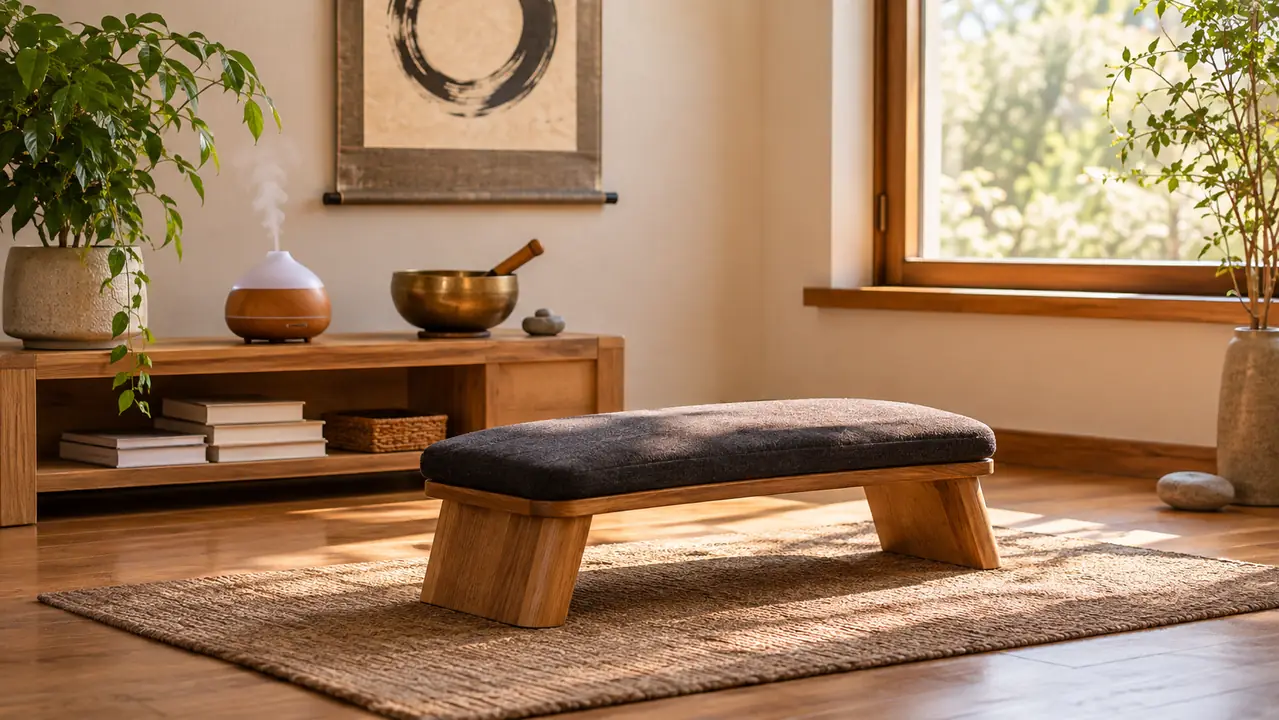
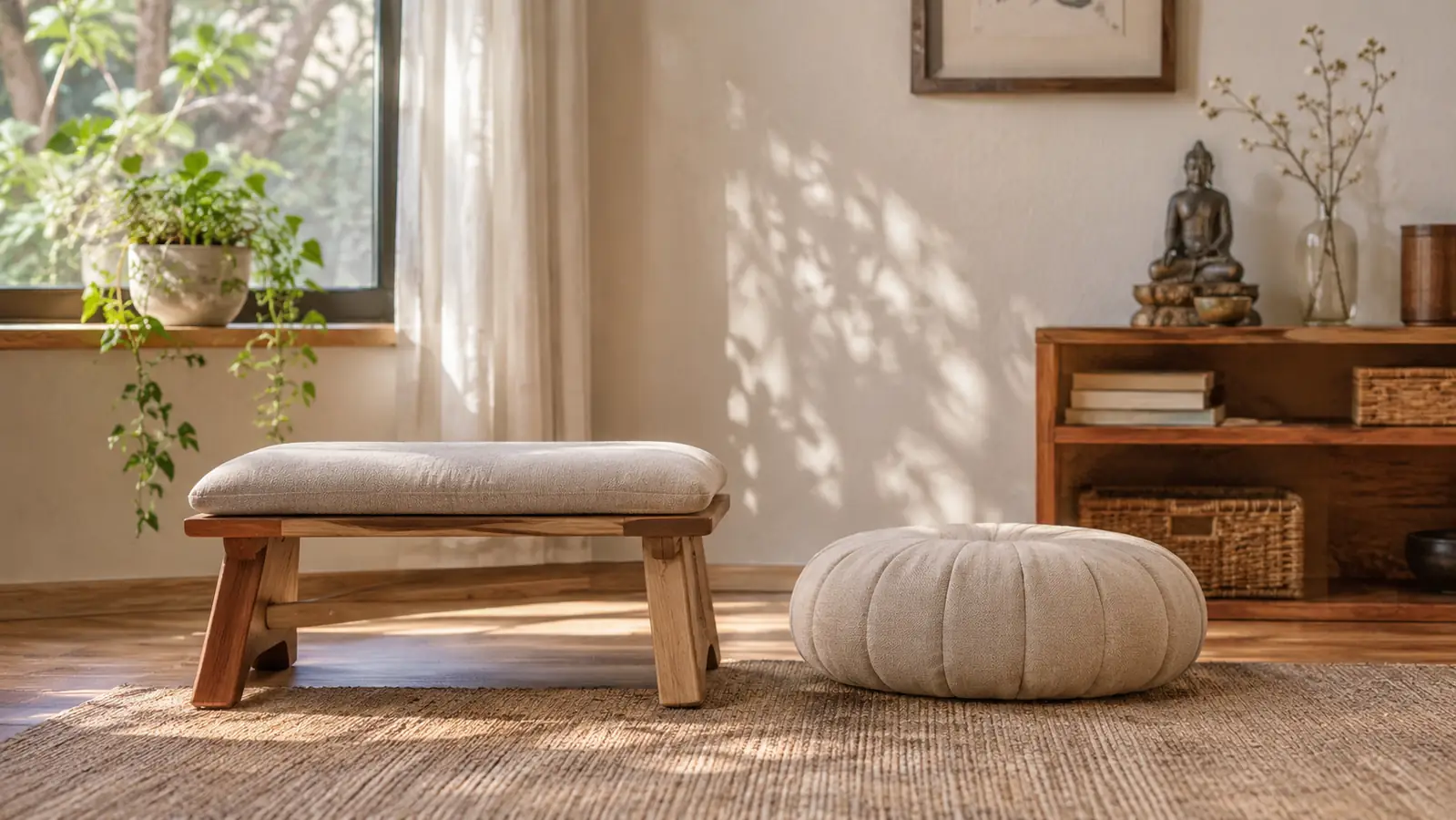
I keep two seats in my practice corner, and I use both. Most mornings I sit on the Retrospec Sedona zafu I have owned for about four years. On stiff mornings, when my lower back starts talking before I even reach the cushion, I reach for the Waterglider Meditation Bench instead. After about a year with the bench, I can give you an honest split: they solve different problems, and the right one for you depends on how your body sits and what your knees are willing to do.
Here is the short answer. If you have a stiff back, tight hips, or knees that complain about kneeling, the Waterglider bench is the stronger choice, because its rounded, angled legs let you tilt the seat to an angle your back can live with. If you love the familiar feel of a cross-legged sit and you do not need help holding your spine up, the zafu is simpler and usually the more budget-friendly option. Neither one is better in every way. This is a genuine either/or, and I will walk you through the rows that matter.
The Two Seats in My Corner
My practice corner is a small space by an east-facing window in the spare bedroom, with a low wooden shelf that holds my diffuser and my singing bowl. The Waterglider bench and the Retrospec Sedona zafu share that corner. The zafu has been there about four years, ever since I replaced the folded blanket I used to sit on. The bench joined it one winter when my lower back got worse and I needed something that would hold me differently.
I did not buy the bench to replace the zafu. I bought it to have a second option, and that is how I still use them. On days when my back feels fine, I sit on the zafu and enjoy the familiar cushion. On stiff mornings, I slide the bench out, find the tilt that works, and sit for the full twenty minutes. The two seats are not in competition in my house. They are both tools, and I reach for whichever one my body asks for.
How I Compared Them
I compared them the only way that makes sense to me: by sitting on them. Same corner, same east-facing window, same twenty minutes, same time of day. I paid attention to whether my back stayed quiet, whether my knees went numb, whether I fidgeted less, and whether I could carry the seat to the Tuesday meditation circle at the library without a fuss. Those are the things that actually changed my practice. I did not time myself with a stopwatch or keep a scorecard. I just noticed, week after week, which seat I reached for and how I felt when I stood up. One Tuesday last February, my back was so stiff I almost skipped my sit altogether. I slid the bench out anyway, found the tilt, and sat the full twenty minutes. That was the morning I stopped thinking of the bench as a sometimes seat and started reaching for it on purpose. I also noticed that I fidgeted less by the third week, and that my knees, which used to go numb around minute twelve on the cushion, stayed quiet on the bench.
I also looked at the practical details, because a seat you cannot live with will end up on a shelf. The Waterglider bench needs no assembly, weighs 3 pounds, and wipes clean with a dry cloth. The zafu is a cloth cushion, so it asks for a little more care over time. Neither detail is a reason to buy or skip anything by itself, but together they tell you what living with each seat is like. The bench arrived ready to use the same day. The cushion needed a few days to settle into its shape when it was new.
| Waterglider Meditation Bench | Retrospec Sedona Zafu | |
|---|---|---|
| Back support | Rounded, angled legs let you tilt the seat to the angle that eases a stiff lower back | Lifts the hips so the spine can stack, but you hold the posture yourself |
| Sitting height | 8.5 inches tall, made for practitioners up to 6 feet tall | Sits lower to the floor, which suits open hips and traditional cross-legged sits |
| Material | Sustainable acacia wood, wipes clean with a dry cloth | Cloth cushion that asks for a little more care over time |
| Portability | 3 pounds, easy to carry to a library circle | Also light, and it packs into a bag more easily |
| Familiarity | Takes a few sits to find the angle your back wants | Feels familiar the first time you sit |
| Assembly | No assembly required | Nothing to assemble either |
| Weight limit | Supports up to 250 pounds | Depends on the individual cushion |
| Typical cost | Check today's price on Amazon | Usually the more budget-friendly option |
The difference is the tilt. On the bench I can change the angle until my lower back stops talking, and then I can actually sit.
The Details on the Listing
The listing for the Waterglider bench is refreshingly plain. It is 8 inches deep, 18 inches wide, and 8.5 inches high, it weighs 3 pounds, and it supports up to 250 pounds. It needs no assembly, which I appreciated the day it arrived, and the care instructions are simply to wipe it with a dry cloth. The material is acacia wood, described in the listing as highly sustainable, and the legs are rounded and angled, which is the feature that does the actual work. The day it arrived, the box was small enough to carry with one hand. I opened it on the kitchen table, set it on the floor, and sat on it before I had cleared the packing paper away. I had expected to hunt for an allen wrench and a folded instruction sheet, but there was nothing to do but sit. I wiped it with a dry cloth that first week, and it has not needed anything since. The listing also shows 4.4 stars from more than a thousand ratings, which is the kind of number I check when I buy anything sight unseen.
The one limit worth knowing is the height. The listing says the bench is for practitioners up to six feet tall, so if you are taller than that, you may want to measure your shins before you order. I am not six feet tall, and I have never felt crowded on it. I mention the limit because I would want someone to mention it to me.
Where the Waterglider Wins
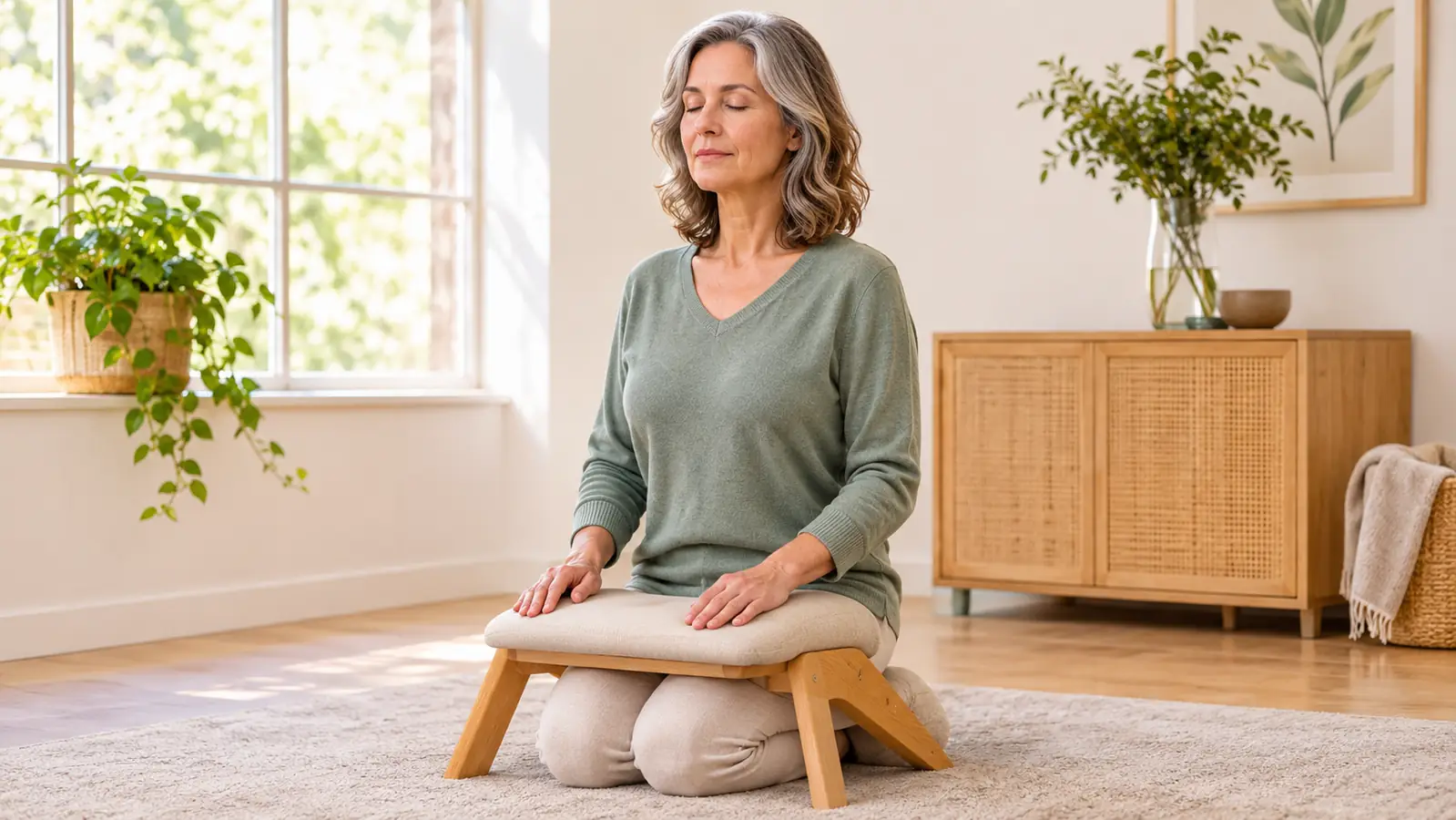
The Waterglider bench wins the row that matters most to me: back support. The rounded, angled legs work like a rocking chair, which is exactly what the listing says, and it is exactly what I feel. I can slide the bench forward or back and change the tilt until my lower back settles. On a bad morning, that adjustment is the difference between a full twenty-minute sit and getting up after five minutes because I cannot get comfortable. One morning last winter, I sat down on the zafu, shifted twice, and stood up again before the singing bowl had stopped ringing. I pulled the bench out, tilted it back a little, and sat the full twenty minutes without moving. That is the difference in one paragraph. On the bench I can make small adjustments without lifting myself off the seat, just a gentle rock forward or back, and the rounded legs find a new angle. The zafu does not offer that. Once you are down, you are down.
It also wins on the practical rows. The bench is made from sustainable acacia wood, so it has held up through a year of regular use on my stiff mornings in a corner that gets morning sun, and a dry cloth is all it needs. It supports up to 250 pounds. It weighs 3 pounds, which is light enough to carry to the Tuesday circle if I want it there. And the listing says it suits practitioners up to six feet tall, so most people will not feel crowded on it.
The other thing the bench does quietly is hold my posture for me. On the zafu, my spine has to do all the work. On the bench, the angle of the seat does part of that work, and my back can relax into the sit. That is a small shift, but it is the shift that lets me stay longer. I do not want to oversell it. It is still a wooden bench, not a cure for anything. But for everyday stiffness, it has genuinely helped me sit longer without fidgeting.
Where the Retrospec Sedona Zafu Wins
I want to be fair here, because the zafu is not the loser in this comparison. It wins on familiarity. I sat on a folded blanket for years before I bought the Retrospec Sedona about four years ago, and the moment I switched to a real cushion, my hips thanked me. A zafu does not ask you to learn anything. You put it on the floor, you sit, and your body knows what to do. On days when my back is fine, that ease is exactly what I want before breakfast. I remember the first morning I sat on the zafu instead of the folded blanket. I had been folding an old quilt into a square for years, and no matter how I stacked it, my hips tilted and my knees complained by minute ten. The cushion raised me just enough that my knees stopped carrying the argument. Four years later, the cushion still holds its shape, and that is more than I can say for the blanket it replaced.
It also wins on cost and on how it travels. The zafu is usually the more budget-friendly choice, and it packs into a bag more easily than a wooden bench, which matters if you carry your seat to a friend's house or a group sit. I have taken it to the library on evenings when I wanted the familiar cushion under me. The bench stays home more often, partly because it is a little more precious to me and partly because the zafu is simply easier to tote.
The zafu also wins on tradition, if that matters to you. A round cushion on the floor is what most people picture when they picture meditation, and there is something calming about that familiarity. The bench is a newer shape for most of us, and it took me a few sits to trust it. The cushion never needed that trust. It was home from the first sit. When I lead the Tuesday circle, more people recognize the cushion than the bench, and that recognition helps a beginner feel less out of place.
If your back is the reason you keep skipping your sit, the Waterglider bench is worth a try.
It is the seat I reach for on stiff mornings, and after a year it still looks and feels the same. See today's price on Amazon and find out whether the tilt works for you.
Amazon Check Today's Price on Amazon →Who Should Buy Which
Buy the Waterglider bench if you have a stiff lower back, tight hips, or knees that complain in a cross-legged sit. Buy it if you want a seat that holds part of your posture for you so your mind can do the sitting. Buy the Retrospec Sedona zafu if you already sit comfortably cross-legged and you want the familiar feel of a cushion at a lower cost. And if you are like me, buy one of each and let your body choose by the morning.
One more honest note. A seat will not fix a back that needs a doctor, and I am not one. If your pain is sharp or constant, please talk to a professional as well. For the everyday stiffness that comes with sitting on the floor, the bench has genuinely helped me sit longer without fidgeting, and that is the whole job I ask of it.
What I'd Tell a Friend at the Library
When someone in my Tuesday circle asks me which seat to try, I usually say the same thing. Start with what your body already likes. If you have been sitting cross-legged on a cushion for years and it works, there is no reason to switch. If you keep skipping your sit because your back hurts, or your knees go numb, or you cannot get comfortable on the floor, then a bench is worth trying before you give up on floor sitting altogether. You can always go back to the cushion. Nobody is grading your seat.
The Waterglider bench is not magic. It is a well-made wooden bench with a smart angle, and that angle happens to solve a problem I lived with for years. The zafu is not outdated. It is a familiar, affordable cushion that has served me well for four years. I use both, and I will keep using both. If you are trying to decide between them, let your body cast the vote. It usually knows.
The bench that keeps me sitting on stiff mornings.
If your lower back has been the reason you skip your sit, this is the seat I would hand you first. See today's price on Amazon.
Amazon Check Today's Price on Amazon →