
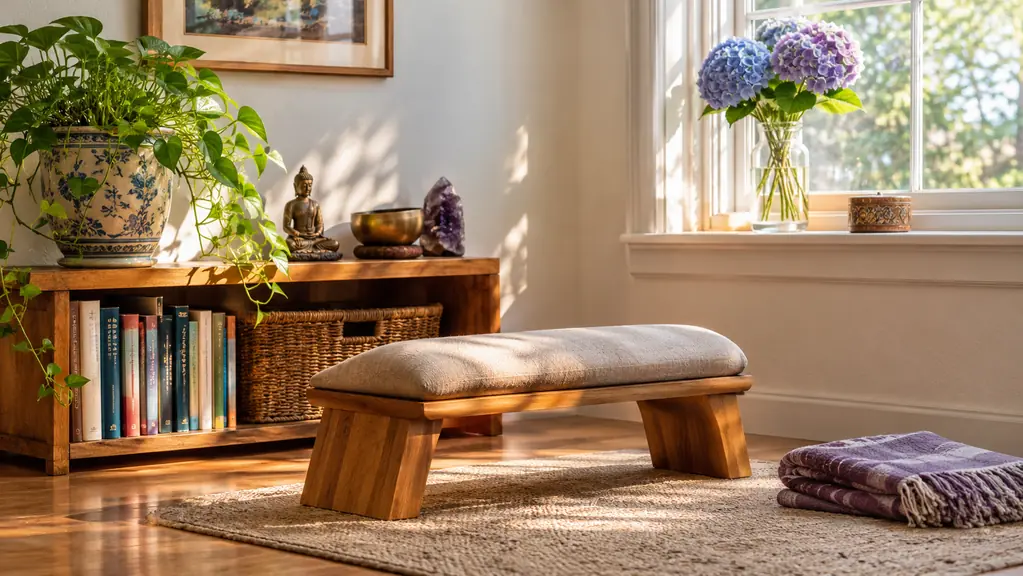
Last winter, my lower back got worse. Not dramatically worse, not the kind of thing that sends you to a doctor, but the quiet kind of worse. I would sit down for my twenty minutes in the morning and spend the first five shifting, trying to find an angle that did not ache. My husband noticed I was getting up earlier to fit in the same amount of sitting. That was when I started looking at meditation benches, and that was when I found the Waterglider Meditation Bench.
I have now used this bench for about a year. I bought it during that same winter, and I still use it, but not the way I expected. I expected it to replace the zafu I had been sitting on for years. Instead, the bench and the zafu share a corner of my practice space, and I choose between them depending on the morning. That honest split is probably the most useful thing I can tell you, so let me explain how I got there.
The Quick Verdict
A sturdy, well-made bench that genuinely helps on stiff mornings, once you accept that it is firm, angled, and not for every body.
Amazon Check Today's Price →A firm seat that helped me sit still again
After a year of use, the Waterglider Meditation Bench is the tool I reach for on the mornings my lower back is stiff. If that sounds like your mornings too, it is worth checking today's price on Amazon.
Amazon Check Today's Price on Amazon →How I've Used It
The bench arrived fully assembled, which I appreciated because I am not handy. It came in a modest box, and there was nothing to put together, no screws, no instructions, no small bag of parts that would roll under the dresser. I lifted it out, set it on the floor of the spare bedroom, and sat on it immediately, still in my coat. It weighs three pounds, light enough to carry from the spare bedroom to the library and back. The dimensions are modest: eight inches deep, eighteen inches wide, and eight and a half inches tall. It is a rectangular seat of acacia wood with a black finish, and it looks like what it is, a simple, purposeful object with nothing to hide.
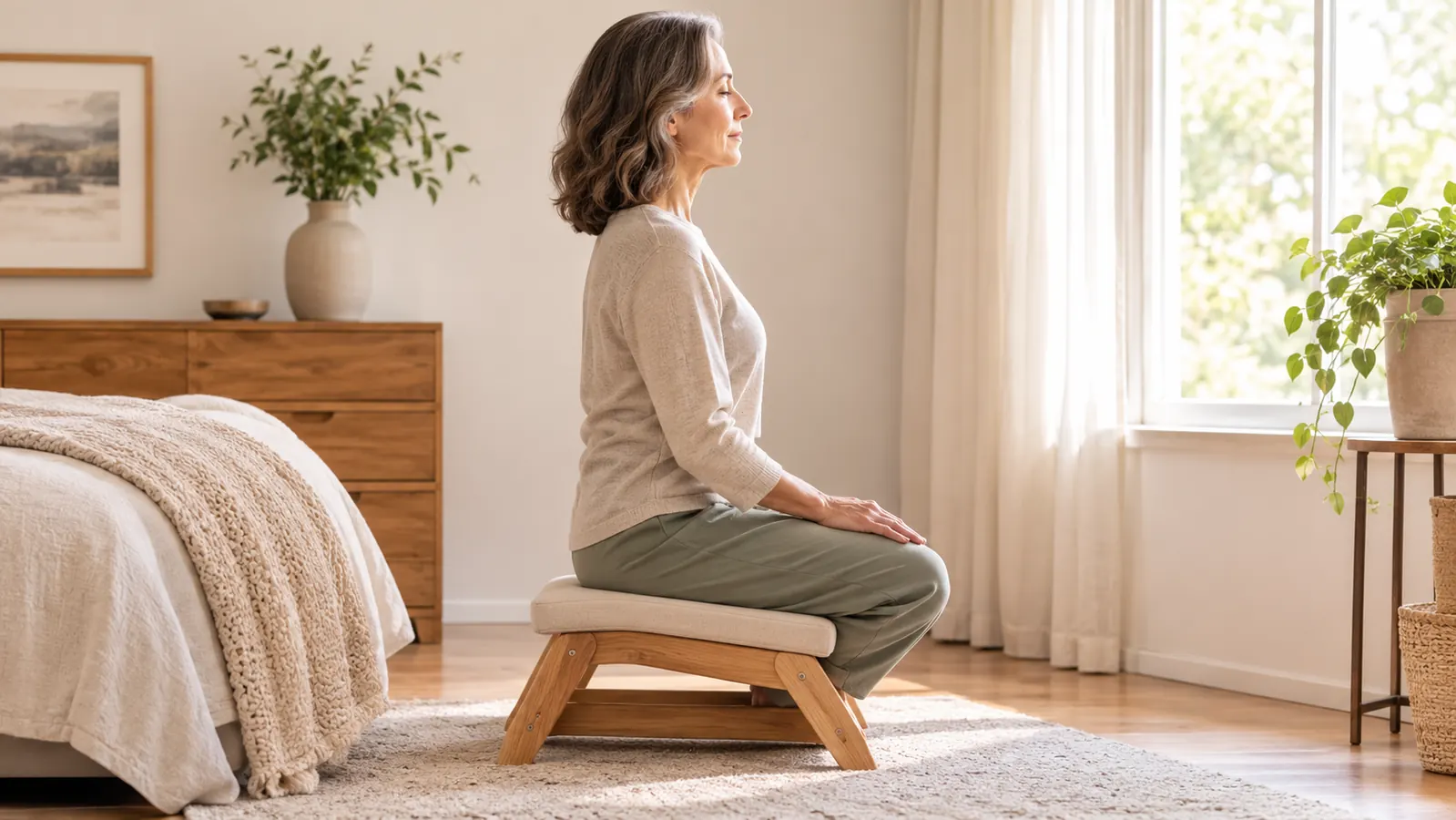
I use it on stiff mornings. On those days, sitting on the zafu means folding my legs under me, and my hips object. The bench changes the geometry. My hips sit higher than my knees, my shins rest on the floor, and my lower back does not have to work as hard to keep me upright. I sit for the same twenty minutes as any other morning. The difference is that I stop checking the clock. On the zafu, a stiff morning means I spend half the sit bargaining with myself. On the bench, I settle in and the time passes the way it is supposed to.
I also carried it to the Tuesday evening circle at the library for a few months. It tucked under my arm, and it traveled well. I stopped bringing it eventually, not because it failed, but because the circle sits in a mix of chairs and cushions, and I decided I would rather blend in than sit on my bench like a visiting teacher. The bench stayed home after that, and I missed it on the stiff Tuesdays. I thought about that when I wrote this review. A tool that you miss when it is not there is a tool that earns its place.
What Nobody Tells You Before You Buy a Meditation Bench
Here is the honest part. The first week on this bench was not comfortable. The seat is wood, and wood is firm. I sat with my weight too far back, felt the edge press into the backs of my thighs, and wondered if I had wasted money. I almost wrote the whole thing off as a mistake and gone back to the zafu. The fix was simple. I moved my weight forward, toward the front edge of the bench, and the angle clicked. I wish someone had told me that before the first sit, so I am telling you now. Sit forward, let the legs rock once, and then hold still.
The rounded and angled legs are the feature that makes this bench work, and they are also the feature that takes getting used to. Similar to a rocking chair, the bench tilts slightly when you settle onto it. That movement is the bench finding your angle, but it can feel unsteady for the first few sits. I almost reached for the wall the first time. Now I feel the little rock, adjust once, and forget it. The legs are the reason the bench can be so simple everywhere else. They do the work so the seat does not have to.
The other thing nobody tells you is that a bench does not hold you. A chair has a back. A cushion lets you sink. This bench asks you to sit with your own posture, which is the point, but it is also why some people will hate it. If you want to be held, this is not the tool. If you want to be reminded to sit up, it is.
What Works Well After a Year
The acacia wood has held up. I wipe it with a dry cloth when dust settles on the finish, and that is the whole of the care it has needed. No wobble has developed in the legs, and no creak when I settle onto it. For a piece of furniture that gets used daily, that matters. I have owned enough wooden things to know that a year without loosening is a good sign.
The height works for me. Waterglider says the bench suits practitioners up to six feet tall, and the eight and a half inch seat puts my hips where they need to be. I cannot test the six foot claim from personal experience, but I can tell you the bench does not feel like a child's stool, which is what I worried about when I ordered it.
The weight is the quiet win. Three pounds means I move it without thinking. It lives in the corner by the east window, and on the mornings I want it, it is already where I need it. When I carried it to the library, it never felt like an errand. That sounds small, but a practice tool you have to wrestle out of a closet is a tool you will stop using. This one never gives me a reason to skip a sit.
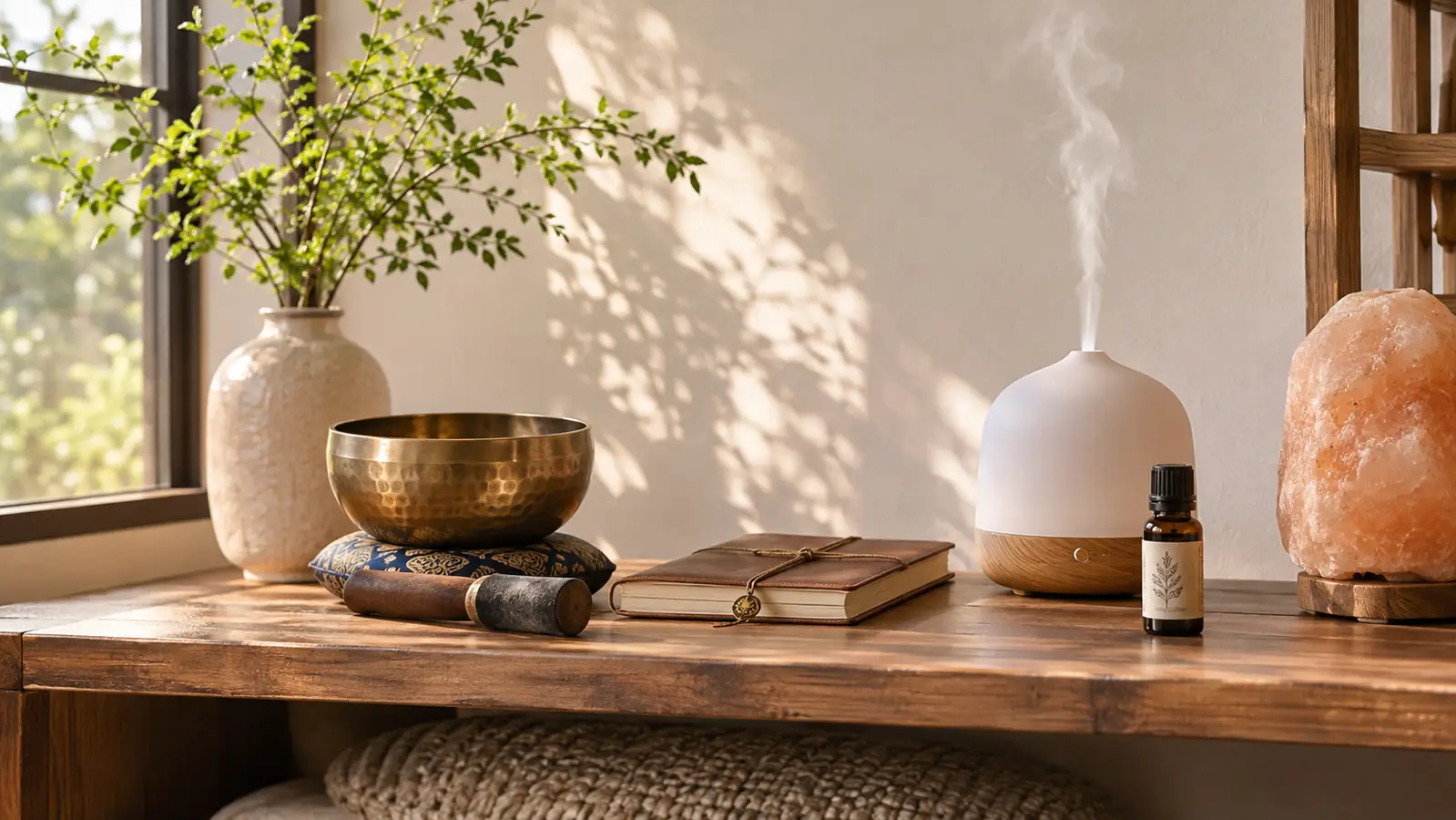
The bench did not change my practice. I want to be clear about that, because a lot of meditation products promise transformation, and this bench makes no such promise. What it did was remove a physical distraction. On the mornings my back is stiff, I strike the singing bowl once, settle onto the bench, and get to the sitting instead of the shifting. It does not make me calmer or wiser. It makes my hips quiet so I can do the work myself. It also fits the corner I already had. The bench leans against the low wooden shelf when I am not using it, next to the diffuser with a few drops of lavender or cedarwood and the journal I write in after my sit. Nothing about my setup changed except the option to sit higher. I like that. The best tools do not ask you to rearrange your life. They just show up when your body needs them.
Where It Fell Short for Me
The firm seat is the first thing I would warn a friend about. I sit on the bench in thick socks, and on tight-hip mornings I add a folded towel. The bench does not come with a cushion, and the wood does not soften. If you only ever sit on padded things, give yourself a week before you judge it. Your sit bones will adjust. Mine did. I would also say this: the firmness is part of why the bench keeps me alert. I have never once dozed off on it, which I cannot say for the zafu.
The bench is also not a fix for a bad back. It helped mine on stiff mornings, but I would not want anyone to read this and think a piece of wood replaces a doctor, a physical therapist, or a decent stretch. On my worst mornings, I skip the bench and the zafu and sit in a chair with my feet flat. That is not failure. That is listening to your body.
One more honest note. The black finish shows dust, and it shows it quickly. I keep a dry cloth on the low shelf next to the diffuser, and I wipe the bench down once a week. It is a small thing, but it is a thing, and I would rather tell you than have you discover it after a month and wonder if the bench arrived dirty. It arrived clean. It just does not stay visibly clean for long, and that is the tradeoff for a finish that looks this sharp.
What I Liked
- Rounded, angled legs let you find a comfortable sitting angle and hold it
- Three pounds and fully assembled, so it is easy to move and use anywhere
- Acacia wood has held up well after a year of regular use on my stiff mornings
- No wobble, no creak, and care is just a dry cloth
- Designed for practitioners up to six feet tall
Where It Falls Short
- The seat is firm wood with no cushion, and it takes about a week to adjust
- The slight rocking motion can feel unsteady at first
- The black finish shows dust and needs a weekly wipe
- Not a chair, not a backrest, and not a treatment for back pain
On the mornings my lower back is stiff, the bench gets me through twenty minutes without shifting. The zafu does not.
How It Compares to What I Used Before
I have owned my Retrospec Sedona zafu for about four years, and I still sit on it most mornings. The zafu lets me cross my legs and feel settled in a way a bench never will. It is softer, rounder, and more forgiving when I want to melt into the sit. The bench, on the other hand, is what I reach for when my back is stiff, because it takes the bend out of my hips. They are different tools for different bodies on different days, and I have stopped trying to declare a winner.
If you are choosing between a bench and a cushion, ask yourself one question. Do your knees and hips complain when you fold your legs under you? If yes, a bench is worth trying. If you sit cross-legged happily, a cushion may be all you need. I kept both, and I use both. That is not indecision. That is having a stiff back some days and not others. On the days I choose the bench, I am usually glad within the first minute. On the days I choose the zafu, I am usually glad too. The bench won the stiff mornings, and the zafu won the rest.
One woman in my circle tried the bench at a Tuesday meeting and said it reminded her of sitting on a kitchen stool. She meant it as a compliment. She liked that it kept her alert. Another person tried it and handed it back after two minutes because the rocking motion made her feel unsteady. Both reactions are fair. The bench asks something of you, and not everyone wants to give it. I used to assume everyone needed the same seat. Now I bring an extra folded blanket in my bag and tell new people they can sit on the floor, on a chair, or standing, whatever their body says. The bench taught me that.
What I Would Tell a Friend at My Kitchen Table
If we were sitting at my kitchen table and you told me you were thinking about a meditation bench, here is what I would say. Try one before you buy one if you can. The bench changes your sitting angle in a way that is hard to understand from a photo. My own first sit felt like perching on a stool at a counter I was too short for. By the third morning, it felt like the most natural seat in the house. Your experience may be the opposite, and that is exactly why trying matters.
I would also tell you to think about what you are solving for. If your problem is that your legs fall asleep or your knees ache, a bench is a real answer. If your problem is that you do not sit at all, a bench will not fix that. No bench has ever made anyone meditate. It only makes the sitting more comfortable once you choose to do it. I say that with love, because I have bought more than one object hoping it would do the sitting for me. The Waterglider bench did not do my sitting for me. It just stopped giving me reasons to get up.
And I would tell you that the Waterglider bench is the one I kept. I have returned other meditation tools over the years, cushions that flattened, a singing bowl that arrived cracked, a timer that confused me. This bench is the rare tool that did exactly what the listing said it would do. It is a wooden bench with rounded legs, and it holds me at the angle my back needs. That is the whole review, really.
Who This Is For
Buy the Waterglider Meditation Bench if you sit for daily practice and your body complains about the floor. It is for people with tight hips, stiff lower backs, or knees that object to folding. It is for people who want a firm, simple seat that does not wobble after a year of use, and who do not mind a short adjustment period. It is also for taller practitioners who find that most cushions do not lift them enough, since Waterglider designed the legs with practitioners up to six feet in mind.
Who Should Skip It
Skip it if you want padding, if you want a backrest, or if you are not willing to sit through a few awkward first sessions. Skip it if a bench that rocks slightly while you settle sounds like a distraction rather than a feature. And if you have a real injury or chronic pain, please talk to a professional before you buy any sitting tool. A bench is a piece of wood. It is a good piece of wood, but it is not a treatment.
The bench I reach for on stiff mornings
After a year of honest use, the Waterglider Meditation Bench earns its place in my practice corner. If your body is the reason you are not sitting, it is worth checking today's price on Amazon.
Amazon Check Today's Price on Amazon →